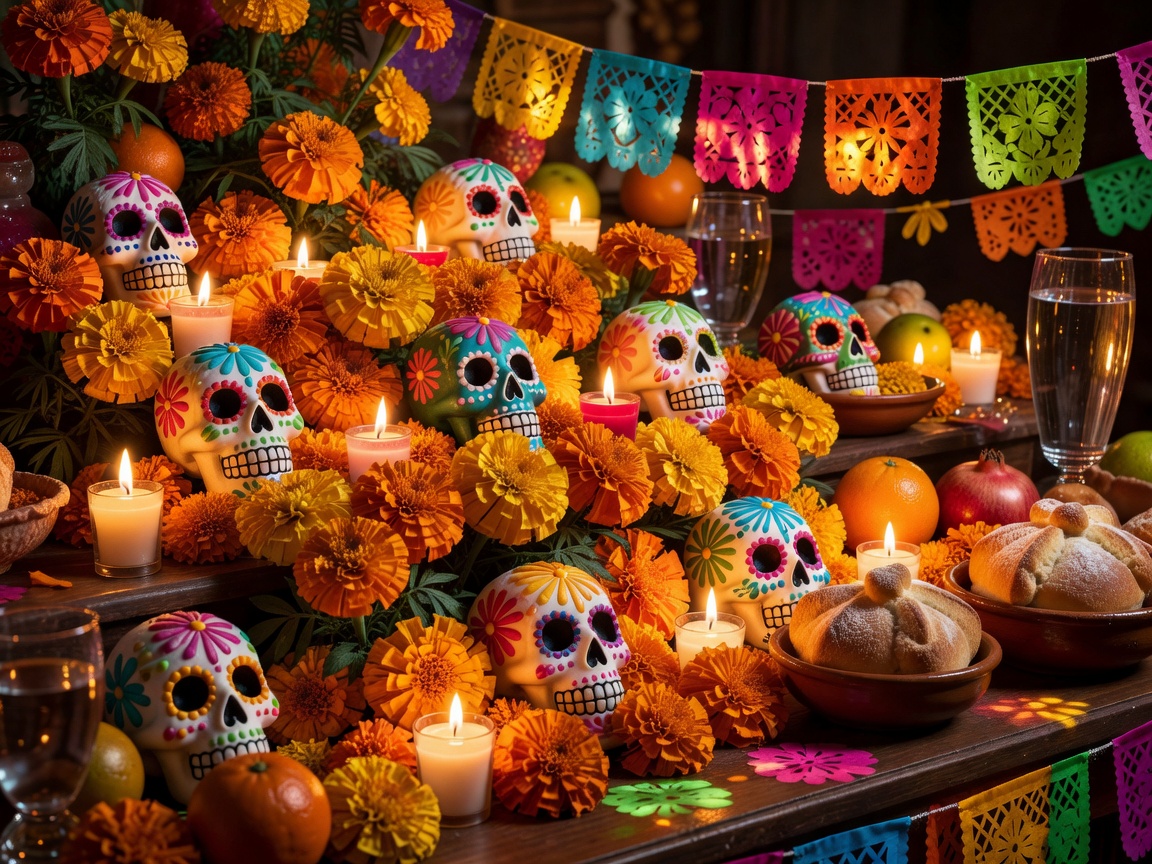
The Philosophy: Death as a Vibrant Awakening
Contrary to mourning-centric Western funeral traditions, Mexico's Día de los Muertos is an exuberant affirmation of life and generational continuity. Rooted in more than 3,000 years of Mesoamerican indigenous rites honoring the Mictecacihuatl (Lady of the Dead), the festival asserts that the deceased remain integral members of the community, awakened from their eternal slumber to share food, drink, and memories with their living kin.
Anatomy of an Ofrenda: Sacred Elements
At the center of every observance sits the ofrenda (altar), built inside private family courtyards, historic plazas, and cemetery plots. Each tier incorporates the four primary cosmic elements:
- Earth (Tierra): Represented by seasonal crops, freshly baked pan de muerto, and traditional chocolate mole dishes preferred by the deceased in life.
- Wind (Viento): Intricately perforated tissue paper banners (papel picado) whose rustling signals the ethereal entrance of spirits.
- Water (Agua): Pitchers of fresh spring water to quench the souls' immense thirst following their arduous journey across the Mictlán underworld.
- Fire (Fuego): Beeswax candles placed in cross patterns, guiding wandering spirits through the darkness back to their ancestral homes.
Key Regional Celebrations in Mexico
1. Oaxaca de Juárez, Oaxaca
Known for its spirited comparsas (carnival-like street brass bands), Oaxaca's celebration features massive sand tapestries (tapetes de arena) in the Zócalo and reverent nocturnal vigils at the historic Panteón General in San Miguel and Xoxocotlán.
2. San Andrés Mixquic, Mexico City
This southern borough transforms on the night of November 2nd during La Alumbrada, when electric city streetlights are switched off, illuminating the San Andrés Apostol cemetery exclusively with tens of thousands of glowing tapers.
Visitor Etiquette & Responsible Engagement
While welcoming to respectful international observers, visitors must observe cardinal decorum rules:
- Graveyard Discretion: Never step over gravestones or intrude on families engaged in private prayer or weeping.
- Photography: Ask express permission ("¿Puedo tomar una foto, por favor?") before photographing family altars or children with Catrina face paint.
- Direct Patronage: Purchase pan de muerto, mezcal, and sugar skulls from independent local market vendors and artisans.