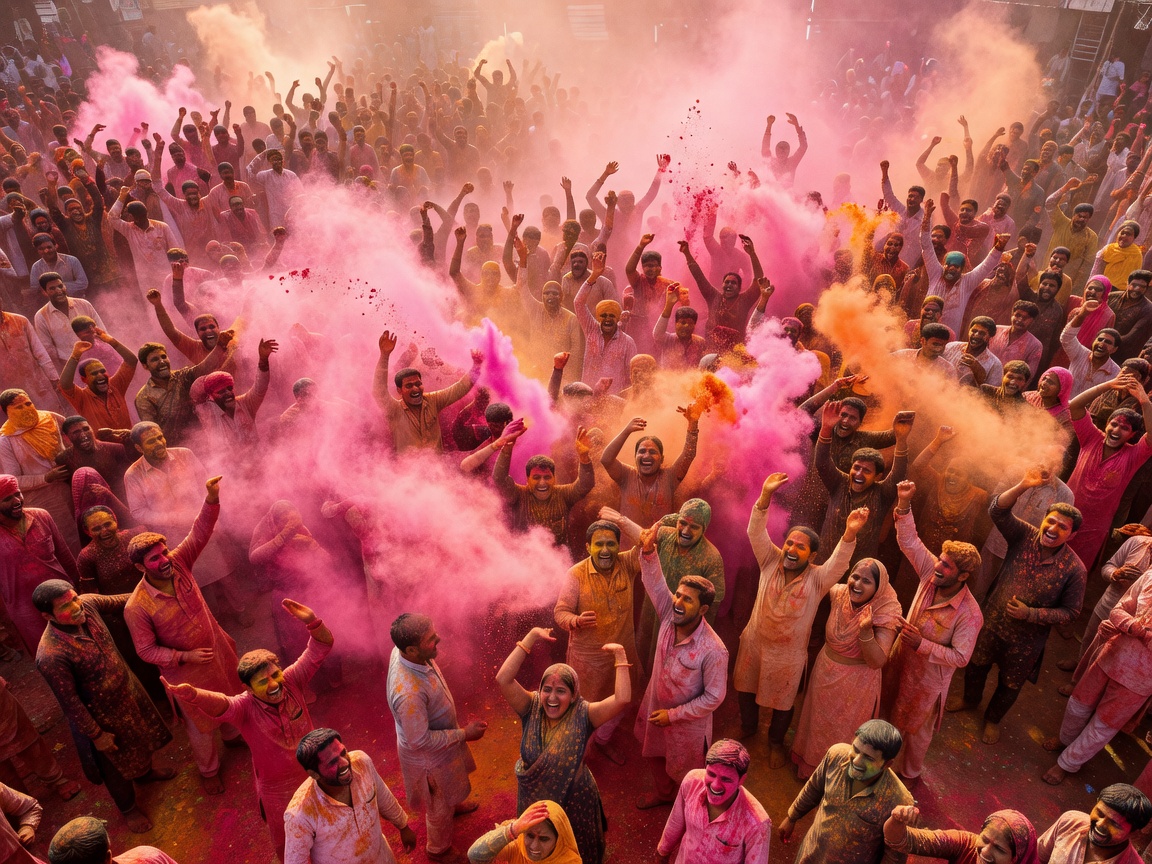
The Spiritual Mythology & Cultural Signposts
Celebrated at the close of the winter season during the Phalguna full moon, Holi commemorates two fundamental Sanskrit legends: the divine, playful love of Radha and Lord Krishna, and the triumph of the young devotee Prahlada over the demoness Holika, representing the ultimate victory of righteousness over demonic tyranny.
The Two-Day Rite: From Flames to Radiant Color
Day 1: Holika Dahan (The Bonfire of Cleansing)
On the eve of Holi, massive communal bonfires are constructed using logs, dried dung cakes, and seasonal dry leaves. Communities gather around the roaring pyres to chant hymns, perform circumambulations (parikrama), and toss in roasted barley grains to burn away spiritual negativity and physical sickness.
Day 2: Rangwali Holi (The Color Play)
From dawn onward, social hierarchies dissolve. Strangers, elders, and youth greet one another with warm embraces and the traditional greeting "Bura na mano, Holi hai!" (Do not take offense, it is Holi!), dusting faces with gulal (powdered herbs and botanical extracts) and spraying water from brass pichkaris.
Iconic Regional Traditions in the Braj Region
- Lathmar Holi (Barsana): Days prior to main Holi, women of Barsana village playfully strike shields held by men from Nandgaon with sturdy bamboo staves in a folkloric reenactment of Krishna’s visit to Radha.
- Phoolon Wali Holi (Vrindavan Bankey Bihari Temple): Celebrated exclusively with fragrant flower petals rather than colored powders, creating a surreal shower of marigolds and rose blossoms.
Essential Health & Practical Traveler Advice
To ensure a safe and joyful experience, international participants should heed verified precautions:
- Skin & Hair Protection: Apply generous coats of pure coconut oil or almond oil over exposed skin and hair prior to stepping outdoors to prevent pigment absorption.
- Clothing: Wear modest, inexpensive white cotton attire that can be discarded afterwards, alongside UV-protective sunglasses to shield eyes from powder.
- Herbal Powder Verification: Insist on 100% herbal, cornstarch-based gulal derived from turmeric, beetroot, and neem leaves rather than synthetic commercial dyes containing heavy metals.