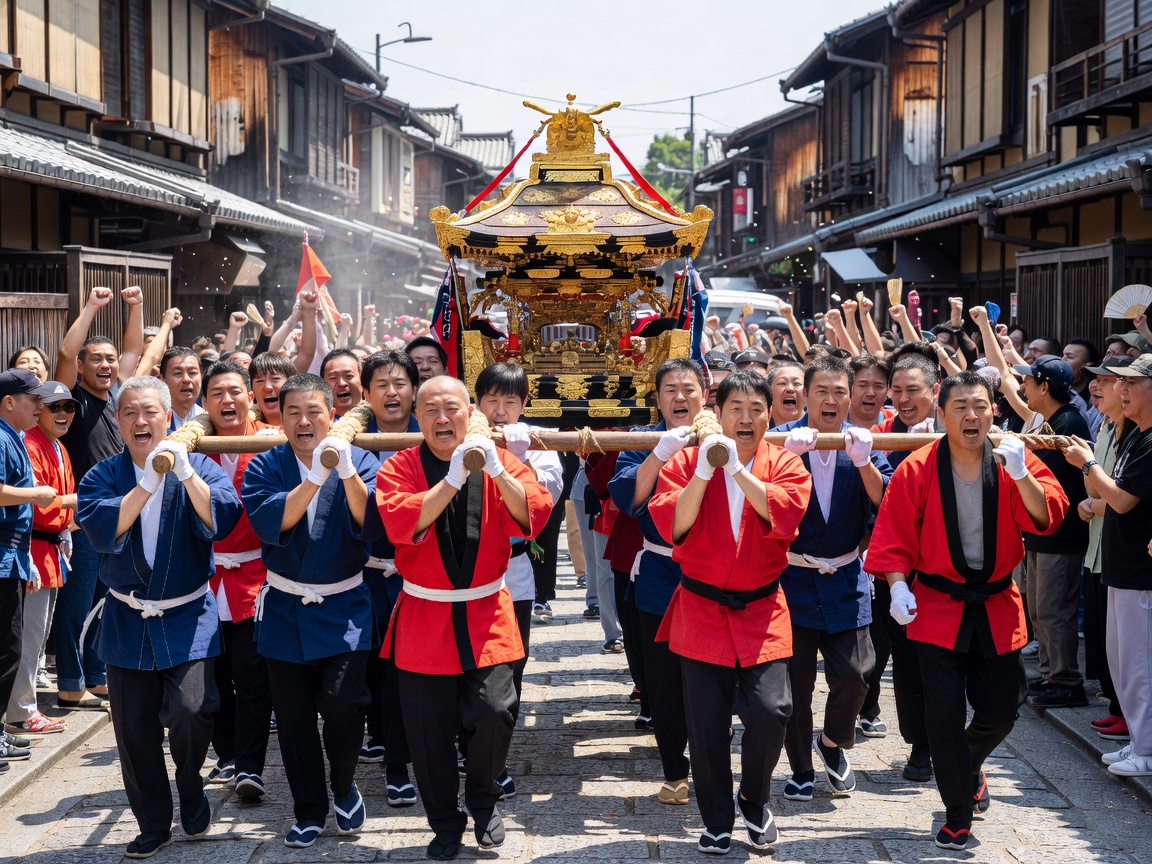
Origins in Epidemic Purification (Goryo-e)
In 869 AD, as devastating plague and pestilence gripped the ancient capital of Heian-kyo (Kyoto), Emperor Seiwa ordered 66 halberds—representing the 66 provinces of Japan—erected at the sacred garden of Shinsen-en. Dedicated to the Shinto deity Susanoo-no-Mikoto at Yasaka Shrine, the Gion Matsuri evolved from an emergency purification rite into one of Japan’s three grandest cultural observances.
The Anatomy of Yamaboko: Mobile Art Museums
The centerpiece of Gion Matsuri are the 33 Yamaboko floats constructed entirely without a single metallic nail using intricate rope-lashing techniques (nawabari):
- Hoko Floats: Massive two-story towers weighing up to 12 tons and rising 25 meters tall, carrying musicians playing ancient Gion-bayashi melodies on bells, drums, and flutes, pulled by teams of 40 to 50 guild members.
- Yama Floats: Smaller decorative floats weighing 1.2 to 1.6 tons depicting scenes from classic Japanese folklore and Chinese classical literature.
- Historic Tapestries: Known as "mobile museums," the floats are draped in priceless Persian silk carpets, Nishijin brocades, and 16th-century European tapestries imported via the Silk Road.
Key Ceremonial Calendar Milestones in July
Yoiyama Evenings (July 14–16 & July 21–23)
During the three nights preceding each grand procession, Kyoto's downtown streets close to vehicular traffic. Lanterns (komagata chochin) illuminate the stationary floats, traditional Machiya merchant homes open their folding screens for the Byobu Matsuri, and street vendors offer local delicacies.
The Grand Processions (Yamaboko Junko)
On July 17 (Saki-matsuri) and July 24 (Ato-matsuri), the floats embark on their monumental parade. The highlight is the breathtaking tsujimawashi maneuver, where giant wooden wheels skid across wet bamboo slats to turn 90-degree street corners.
Visitor Conduct & Etiquette Guidelines
- Respect Float Sacredness: Certain Hoko floats allow public boarding during Yoiyama; remove footwear and follow instructions from neighborhood preservation wardens.
- Beat the Heat: Kyoto in mid-July experiences intense summer humidity; bring traditional folding fans (sensu), drink water frequently, and take shade along Shijo Street.
- Viewing Spots: Reserved grandstand seating (kanranseki) along Oike-dori provides unimpeded views of the morning turning ceremonies.