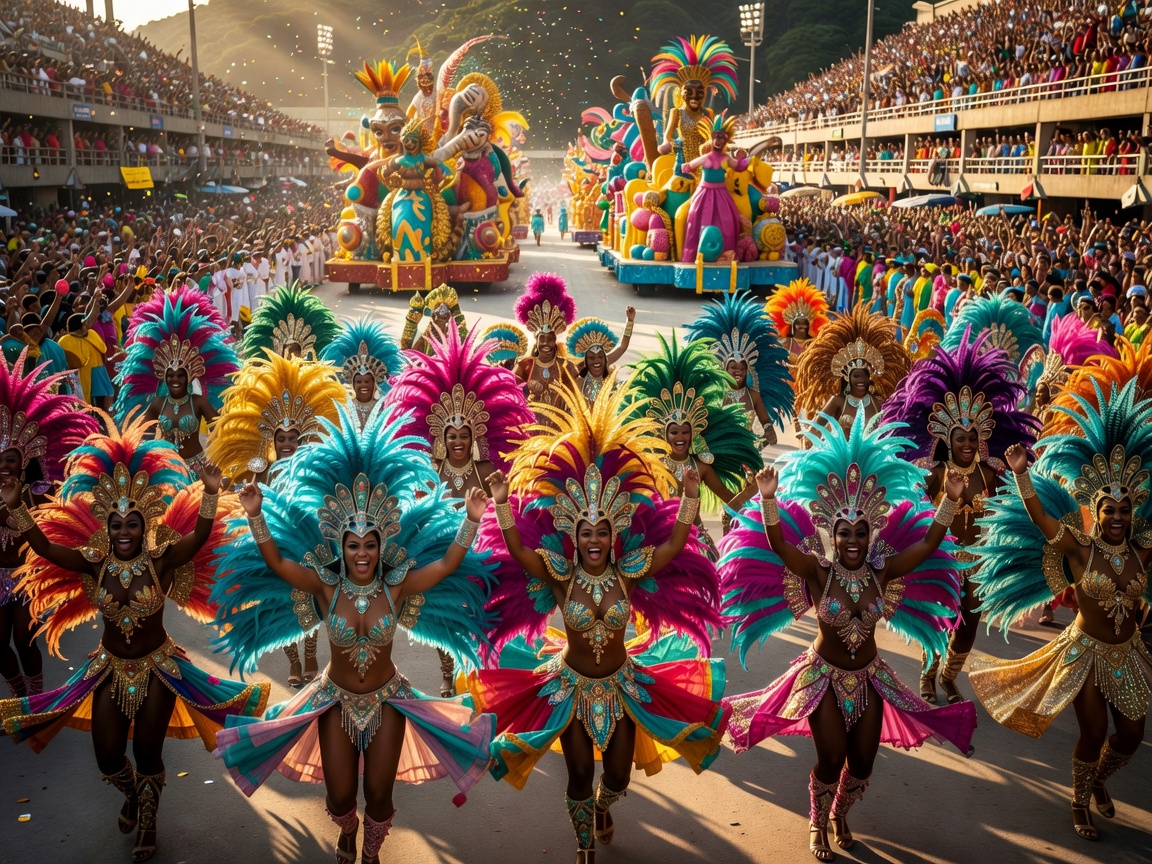
The African Roots & Evolution of Brazilian Carnival
While carnival conceptually entered Brazil through Portuguese colonizers in the form of Entrudo, the festival was completely transformed by Afro-descendant communities in the late 19th and early 20th centuries. Melding ancestral West African polyrhythms, syncretic Candomblé spiritual narratives, and community mutual-aid societies, the modern Escolas de Samba (Samba Schools) were born in working-class neighborhoods such as Estácio, Mangueira, and Madureira.
The Sambadrome Championship Arena
Designed by modernist architect Oscar Niemeyer and opened in 1984, the Sambódromo Marquês de Sapucaí is a 700-meter runway that hosts the premier Grupo Especial (Special Group) parade contests. Over Sunday and Monday nights before Ash Wednesday, twelve top-tier schools compete across strict artistic and technical criteria:
- Bateria: The massive drum corps comprising between 250 and 300 percussionists playing surdos, tamborims, caixas, and cuícas under the master conductor (Mestre de Bateria).
- Enredo & Samba-Enredo: The overarching thematic narrative and original anthem chanted in unison by thousands of wing performers and spectators.
- Comissão de Frente: The vanguard theatrical troupe that introduces the school’s theme with choreography and illusionary stagecraft.
- Porta-Bandeira & Mestre-Sala: The regal couple who protect and dance with the school’s official consecrated flag.
Street Blocos: The Democratic Soul of the City
Beyond the ticketed stadium, over 400 free open-air street parties (blocos de rua) animate every corner of Rio de Janeiro. Legendary blocos like Cordão da Bola Preta (dating to 1918) gather over one million revellers in downtown Rio, while neighborhood blocos in Santa Teresa, Ipanema, and Lapa offer distinct musical genres ranging from traditional marchinhas to brass funk.
Essential Attendee Insights & Safety Protocol
- Sector Selection in the Sambadrome: Sectors 2 through 11 offer elevated bleacher (arquibancadas) views. Sector 9 provides allocated reserved seating, while sectors near the drum niche (recuo da bateria) deliver an unparalleled acoustic rush.
- Hydration & Sun Care: Rio’s high summer temperatures routinely exceed 35°C (95°F); carry sealed electrolyte water and light breathable attire for day blocos.
- Security Measures: Use discreet money belts for smartphones and payment cards, avoiding flashy jewelry in dense street crowds.